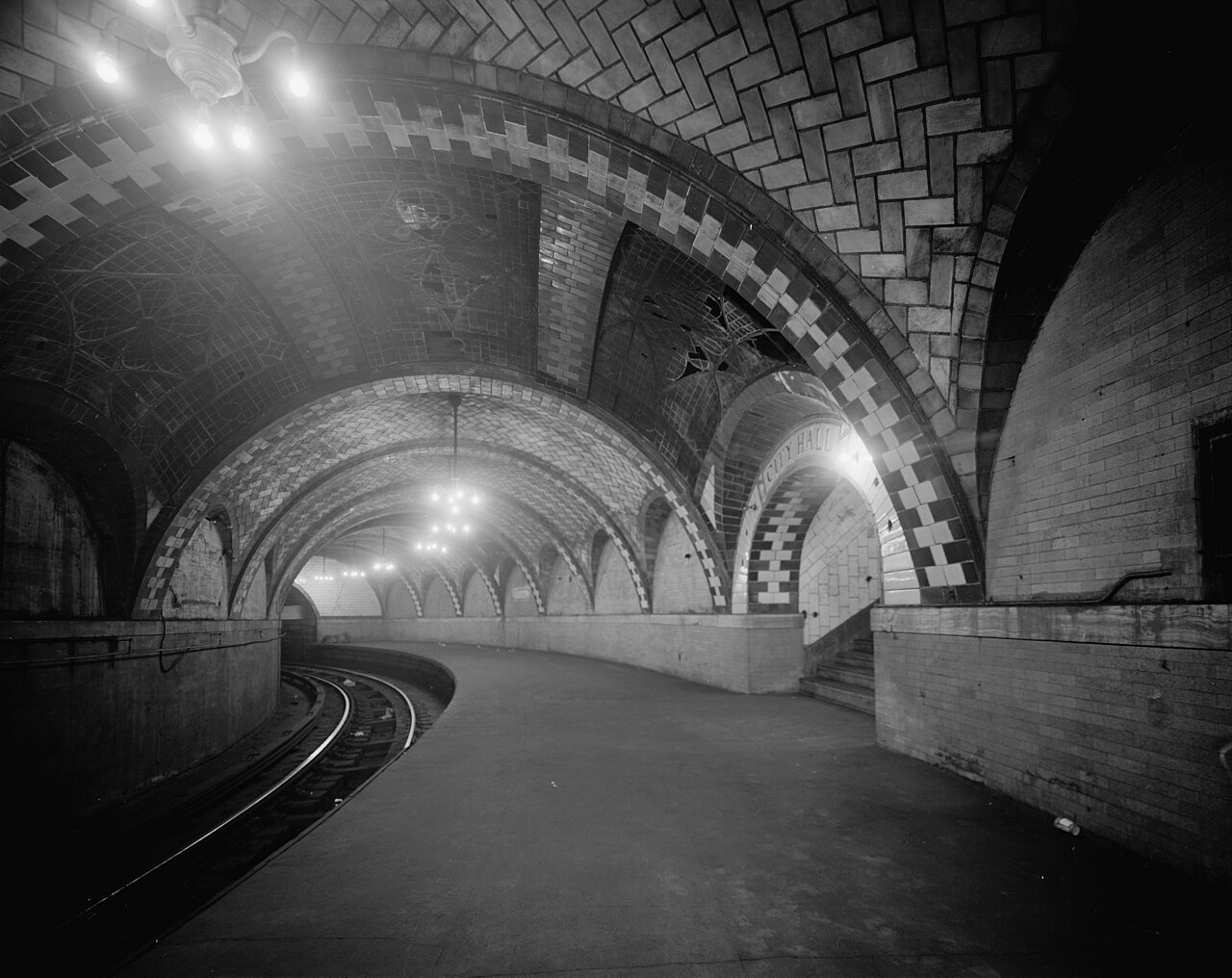
The track bends out of sight, and the ceiling follows it. In David Sagarin’s 1978 photograph of New York’s Old City Hall subway station, patterned arches repeat along a curved platform. A chandelier hangs over what was a working transit space. The station was built to make an impression as well as move passengers.
The New York Transit Museum’s account of the subway’s opening places the first ride here in 1904. Architects Heins & LaFarge designed the station, with vaulted tile ceilings by Rafael Guastavino. Its decorative details belong to the civic ambitions surrounding the new system. Museum’s historical program.
Passenger service ended in 1945, but the loop still turns 6 trains. Platform access is through restricted, members-only museum tours. Current station status. You cannot treat it as an ordinary station entrance or a walk-up museum room. The practical task is to understand the registration requirements before buying membership for the tour.
The short version of the booking process
Tour terms checked October 16, 2026: museum requirements.
| Plan this | Published condition |
|---|---|
| Eligibility and price | Appropriate membership required; $50 per tour ticket, with ticket allowance determined by membership level |
| Children | Minimum age 10 |
| Security | Adults complete the required background check and release within 48 hours of purchase; a ticket alone does not guarantee admission |
| Duration | About 90 minutes total, approximately 20 in the station |
| Physical access | Walking, standing and stairs; the full route is not wheelchair accessible |
| Next advertised sales release | January 13, 2027; selected-date availability unverified |
Use the meeting instructions for your confirmed tour. The Brooklyn museum address is not a substitute for a Lower Manhattan tour meeting.
A station at the beginning of a system
The opening of a subway is a practical event, but it also asks a city to trust a new way of moving. City Hall’s design gave that event a public face. The Transit Museum’s historical description connects the station with the City Beautiful movement, bringing civic display into an underground space. Historical context.
That provides a different way to look at the ornament. The arches and chandeliers were not something added centuries after the transport function. They formed part of how the station presented itself from the beginning. A passenger could be given both a route and a statement about the city providing it.
The museum’s anniversary history identifies Old City Hall tours as one of its continuing ways to bring people into the transit system’s past. The original station is a different experience from the museum’s regular displays of vehicles and objects. Museum’s fifty-year history.
Look closer: the curve organizes everything
Start with the edge of the platform in the 1978 photograph. Follow it into the distance, then compare the line with the arches above. The ceiling does not read as a single uninterrupted tunnel; successive bands divide it into a sequence of spaces.
On the right, a checker-pattern arch surrounds the stair opening beneath the City Hall name. Smaller tiles cover the vault overhead. The contrast between a broad pattern and a fine surface gives the eye several distances at which to read the room.
The photograph is black and white. It shows shape, pattern and lighting at the moment it was made, but it cannot establish the original colors or today’s condition.
The tour is also about time above ground
The tour’s short station visit leaves limited time for close architectural observation. Decide what matters to you before arriving.
For someone interested mainly in architecture, our suggestion is to choose a few features to examine in that limited time: one arch, the junction of ceiling and wall, and the platform curve. A small number of close observations will be easier to retain than a hurried attempt to photograph every surface.
For someone weighing membership solely for this visit, ticket timing and registration are the first decisions. Membership is a condition of eligibility, not a reservation for a specific tour. That is the distinction most likely to affect the rest of a trip.
Old City Hall’s curves explain why the photograph remains compelling. They take a piece of infrastructure normally understood as a stop on a line and make it a room with its own sequence, proportions and public ambition.
Checked October 16, 2026. Desk research and a 1978 archival photograph; no personal tour. Selected-date tickets, precise meeting instructions and individual access arrangements are not verified here.
Follow the thread
Michigan Central Station restores another ambitious passenger interior, while its new public role differs from a return to the old transport service.
At TWA Flight Center / TWA Hotel, a later generation of transport architecture gives even a departures board and bench their own sculpted silhouettes.
The reference photograph