The LU tower was built to advertise biscuits. Its surviving factory annex now contains a very different mix of public life.
Le Lieu Unique in Nantes retains an advertising device large enough to enter. The LU tower was built to announce a biscuit brand; today its ascent tells the story of the former factory and the cultural venue that occupies what remains.
Only one of the factory's two historic towers survives. That imbalance is the first clue that the building beside the canal isn't the whole industrial complex preserved intact. It's a surviving part with a new use, and a familiar piece of commercial architecture that has outlived the production it advertised.
Visiting the tower and the venue
The LU Tower page, checked October 16, 2026, lists a standard ticket at €3, bought on site without reservation. Outside the French zone B school vacations, regular tower opening is Saturday 2–7 p.m. and Sunday 3–7 p.m. Vacation and festival arrangements differ; last admission is listed at 6:45 p.m.
Reduced-mobility access excludes the 0 bis floor and the dome. Choose the tower for its interpretation as well as its view, and confirm the parts you can reach if those exclusions affect you.
The main venue is on Quai Ferdinand-Favre. The practical page identifies Duchesse Anne for tram line 1 and BusWay line 4 and describes the railway station as nearby. Shows use their own ticketing. A bar opening late doesn't make the tower accessible late.
One tower where there were two
The venue's history describes the two towers added in 1909 to the factory complex. Production moved away from the city center in 1986; much of the industrial fabric was subsequently demolished. The remaining annex became the focus of cultural occupation and eventual conversion.
That makes the tower a marker of both presence and loss. It still carries the visual force of a company advertising itself to the city, while the missing twin and vanished factory buildings require an older plan or photograph to understand. The tower visit uses archival images and posters to supply that wider context.
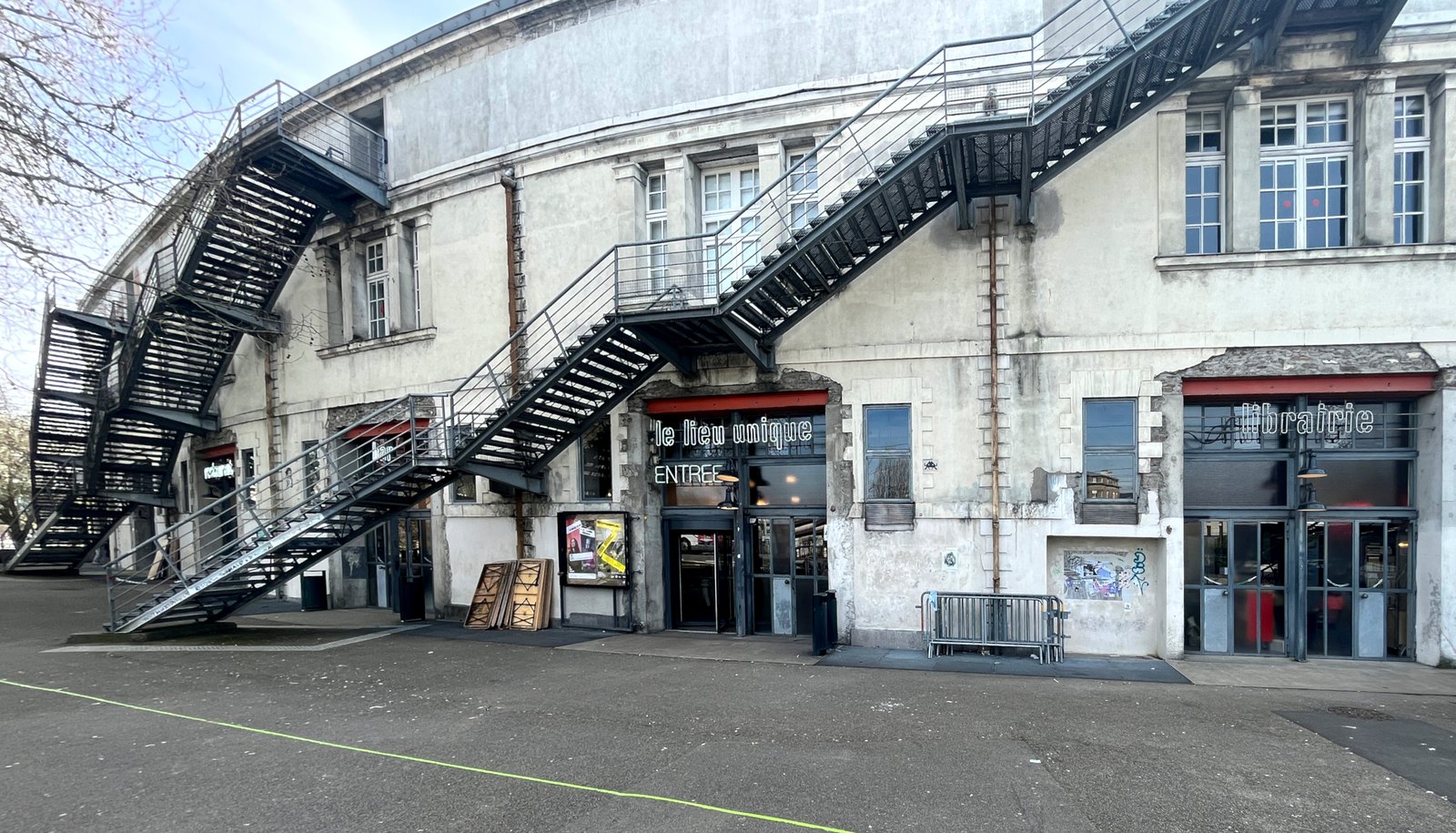
The selected documentary reference shows another face of the surviving annex: pale walls, repeated windows, contemporary entrances and substantial external steel stairs. The tower isn't in that frame. It is useful precisely because it keeps the factory story from collapsing into a single decorated skyline object.
A factory fragment put to work again
Artists began using the former industrial space before the permanent cultural venue opened. The history connects those occupations and events to the decision to preserve and adapt the building. Le Lieu Unique was inaugurated on January 1, 2000.
Its spaces overview brings together the tower, a canal-side terrace, a salon, a bar and a restaurant. These are different ways of inhabiting the same place: watching a performance, meeting someone, looking at an exhibition or simply spending time alongside the water.
That range was part of the conversion's ambition. The factory once organized people around making a product. The cultural venue allows different reasons for being there to coexist. A ticketed performance can be central to one person's evening and irrelevant to someone stopping at the bar.
Read the tower as an advertisement
The operator calls the tower an advertising totem. That description explains the conspicuous design more clearly than treating it as an industrial necessity. A tower could make a brand visible well beyond the factory door, attaching its name to a memorable form in the city.
Its present use reverses the direction of attention. Instead of directing you toward a product, the ascent sends you through a history of the building and its programs. The architecture remains a device for attracting notice, but the subject it advertises has changed.
Outside, compare it with the annex's long, more repetitive walls. The striking vertical feature and the working-scale horizontal building belonged to the same commercial enterprise. Seeing both helps you picture a factory with a public image, rather than a freestanding monument with an incidental industrial past.
Match the visit to the part you want
The exterior and canal suit an architecture stop; the tower adds factory history. For a performance, start with the current program and its own ticketing.
The enduring question is how a fragment of a biscuit factory became a place where people might stay long after the manufacturing day would have ended.
Follow the thread
At Les Machines de l’île, Nantes' shipbuilding halls give a mechanical elephant and its workshop the space and setting they need.
Tabakalera also carries an industrial name into cultural use, while keeping the former tobacco factory's workforce within the story.
Sources and reporting
Researched October 16, 2026, from the linked sources. This is desk reporting; no firsthand visit is claimed.
The reference photograph