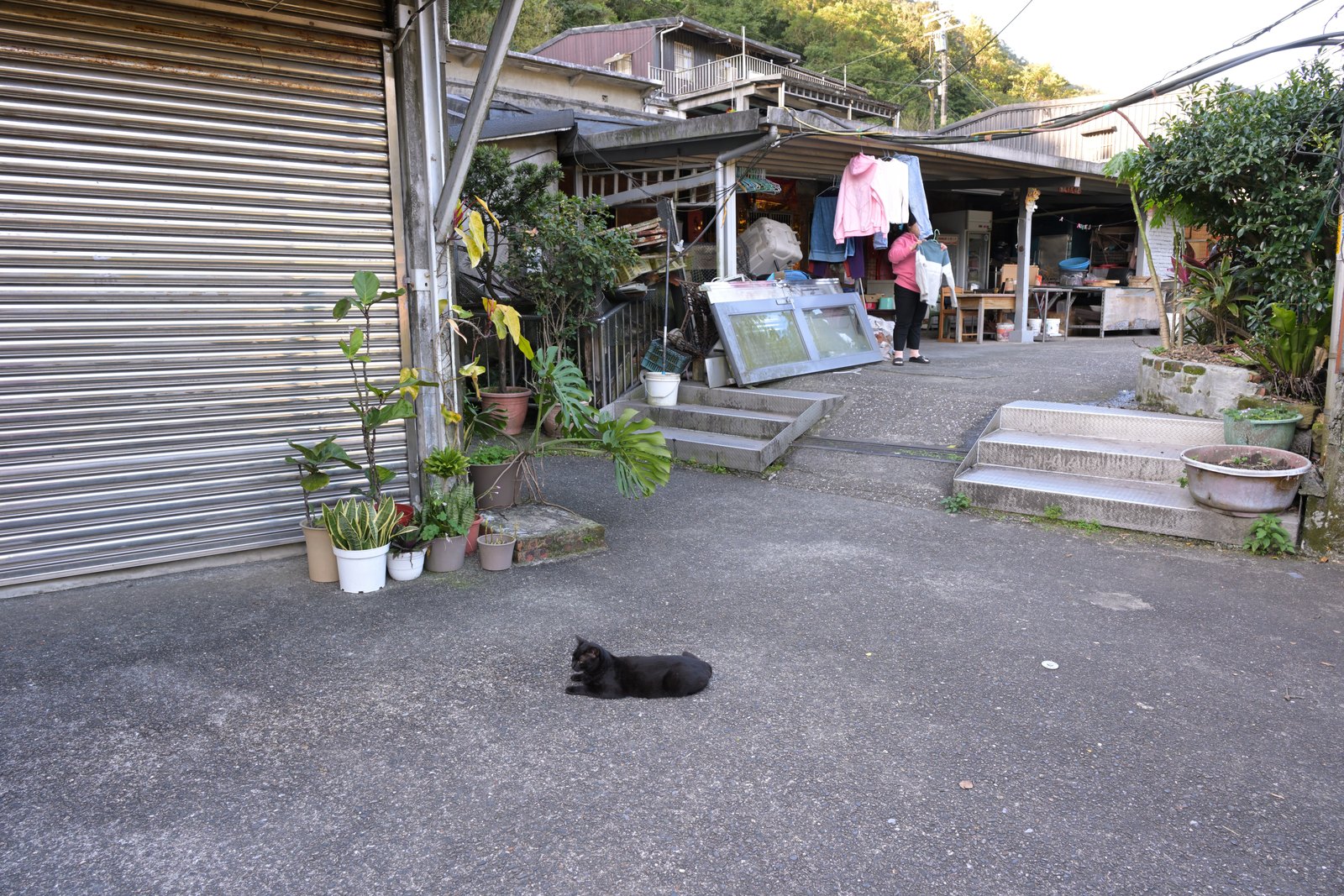
A black cat lies in the lane in the selected photograph of Houtong. Behind it are a metal shutter, potted plants, steps and laundry outside homes. The setting is as important as the animal. Houtong Cat Village is a lived-in place in New Taipei’s former coal-mining district, not an outdoor petting enclosure.
The useful visit combines two kinds of attention: give the cats space, and follow the surviving industrial connections around the station. The pedestrian bridge is part of that story. It links a residential slope with the railway and the mining heritage nearby.
Start with Houtong Station
Use Houtong Station as the rail destination, checking an actual departure through Taiwan Railway. We have not checked a chosen date’s timetable, so this article does not promise a direct train, a particular fare or a fixed journey time from Taipei.
The station is an orientation point, not a reason to rush straight through the village. Before walking away, identify the return connection and which side of the railway contains your first stop. If you plan a museum interior, check that venue’s hours separately from the public lanes and bridge.
The bridge tells you what changed
New Taipei City’s bridge account describes an original 1970 overpass used by residents, followed by reconstruction as Houtong’s cat tourism grew. The replacement incorporated cat platforms and a recognizable animal-like profile. After later repairs, the bridge reopened in March 2025.
This is a modest piece of infrastructure with several jobs. It carries people between the station and homes; it also expresses the place’s newer visitor identity. The cat-related elements are additions to a route that already served daily movement. Calling it a tourist attraction should not make that first function disappear.
When you cross, notice where the movement goes. A bridge can make a town easier to understand because it exposes a relationship that a photograph of one cat omits. There is a residential side, a railway and a network of mining-related places, each with its own use and pace.
Coal moved through a system
The city’s Coal Mine Ecological Park guide lists the preparation plant, transport bridge and other remains of mining activity. The plant was part of what happened after coal came out of the ground. Extraction alone does not explain how the material was handled and moved onward.
The Coal Transporting Bridge account identifies a reinforced-concrete arched structure rebuilt in 1965, with later restoration for heritage use. It is a different bridge from the Cat Bridge. Keep the names separate on a map: one belongs to the handling of coal, the other to pedestrian access across the station.
That distinction offers a useful way to explore. Follow one industrial connection at a time rather than treating every piece of old machinery as a detached exhibit. Ask what entered a building, what happened inside and what left it. A preparation plant, a transport structure and a station become more informative when their relationship is clear.
The cats do not owe visitors a performance
The city’s Houtong walking itinerary asks visitors not to feed, disturb or pet the cats, not to abandon animals here and not to litter. Follow the current signs and local instructions as well. Watching a resting animal from a distance is a complete encounter; it doesn’t need to be converted into handling or a posed photograph.
The reference image gives a good model for what a wider frame can show. The cat is small within the lane. Household objects remain visible, and the route continues beyond it. Keeping that context avoids turning somebody’s doorway into an anonymous animal backdrop.
Let residents use the paths and steps. If a cat moves out of sight, don’t follow it into a home or a private corner. A cafe purchase does not buy access to every animal nearby. These are practical ways to visit a neighborhood, not extras added to a list of photo opportunities.
Pick the mining stop deliberately
A 2024 city restoration update describes the Ruisan coal-processing building’s reuse and a further restoration phase. It helps explain why current heritage management is part of Houtong’s story. It does not establish that every project announced then is complete or every room is open today.
For a compact visit, our suggestion is to combine the station bridge, the public village lanes and one industrial-history stop that is confirmed open. If you want the longer Jinzibei trail, plan it as a separate walking commitment rather than assuming it is a short extension of cat spotting. The city itinerary describes stone paths and steps, so choose the route for your own needs and the day’s conditions.
Houtong’s later identity has not removed the coal town beneath it. Give the cat its lane, then look across the bridge at the structures that explain why the railway and settlement were there in the first place.
Follow the thread
Hashima (Gunkanjima) presents a contrasting coal settlement, where offshore views and a restricted landing route replace the everyday residential lanes still used in Houtong.
Huashan 1914 Creative Park follows another Taiwanese industrial site's changing identity through named factory buildings, contemporary uses and the paths connecting them.
The reference photograph