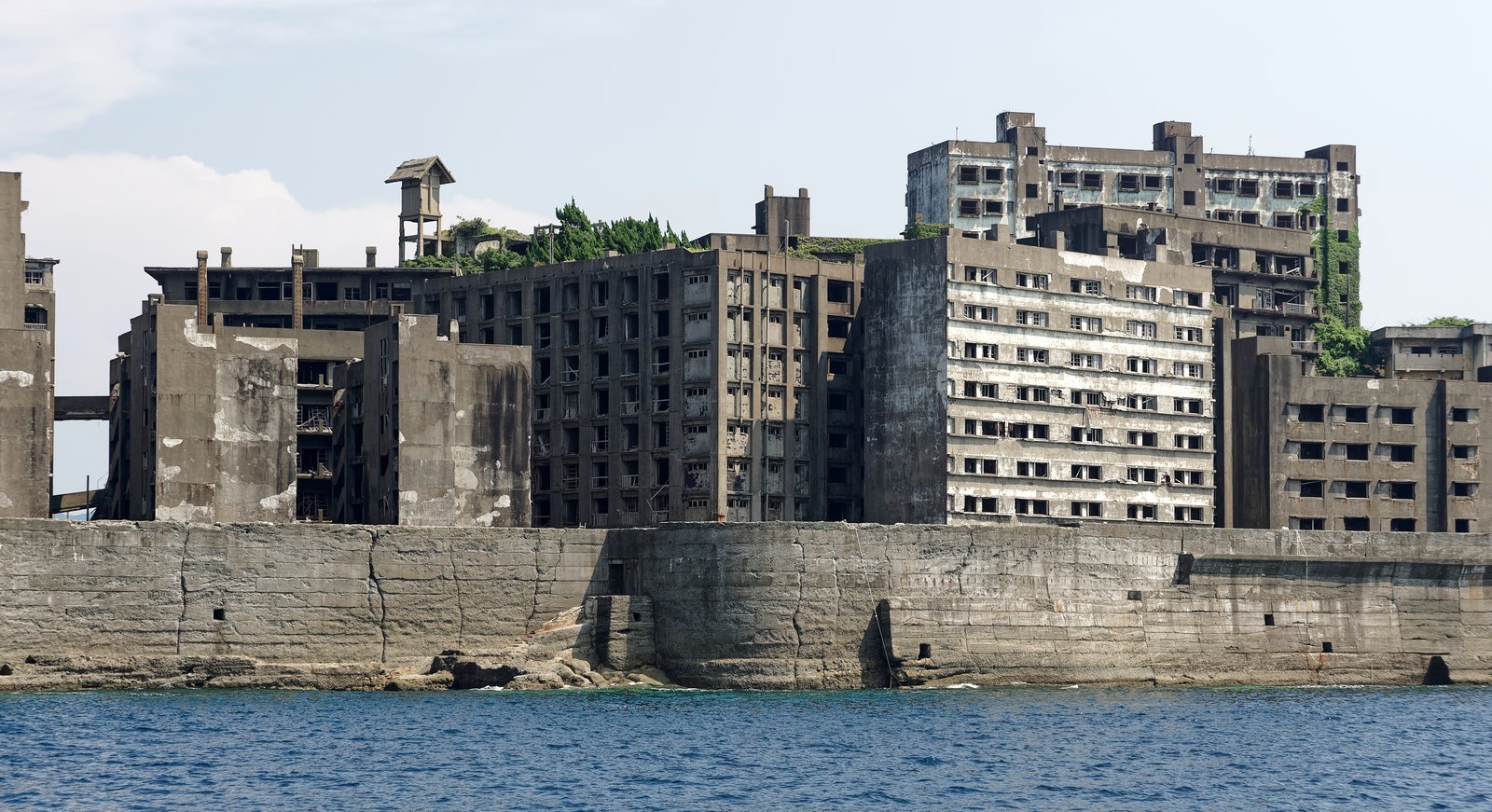
Hashima’s buildings rise behind a seawall, their repeated windows giving a small island the outline of a dense city. The real reference photograph, taken from the water in August 2024, is a reminder that much of what visitors recognize is seen from outside. A landing tour does not grant entry to the apartment blocks in the picture.
Also called Gunkanjima, or Battleship Island, Hashima lies off Nagasaki. It is a former coal-mining settlement reached through organized tours. Choose your boat and landing arrangement carefully, and bring a history that includes the people required to work here as well as the industrial structures left behind.
A landing is a different promise from a sailing
Japan’s national tourism organization describes Hashima as a former coal mine and explains that access requires an organized tour. Operators depart from different parts of Nagasaki Port and apply their own language, age, health and mobility conditions. The mines closed around 1974; public tourism began in 2009.
Before paying, identify the exact operator, departure point and policy if the vessel sails but cannot land. Those are three separate pieces of a trip. A calm harbor does not demonstrate suitable conditions at the island, and a reserved seat does not guarantee the landing stage.
As one specific example, Yamasa Shipping publishes a reservation-only Landing & Cruise taking about 2.5 hours port to port. Its captain makes the landing decision. Children under six may sail with a guardian but cannot land under that operator’s rules. These conditions are not automatically the rules of every Nagasaki company.
The small route and the large photograph
The permitted visitor experience is deliberately limited. Think of it as viewing an industrial settlement from selected edges, not walking freely through a town. A map or photograph that labels an apartment block is describing a feature; it is not granting access to its corridors.
This difference helps set a realistic expectation. An offshore view can explain the mass of housing and the island’s compact outline. A permitted landing can bring masonry, industrial remains and the scale of the seawall closer. Neither provides the perspective of someone standing inside an abandoned living room, and neither needs to pretend that it does.
The chosen reference keeps water in the foreground. Above the seawall, one pale apartment block presents rows of openings, while darker and lower structures overlap behind it. The layers are important: a camera flattens them, making separate buildings look like a continuous face. Trace the edges rather than assuming one uninterrupted structure.
Coal, housing and the wider industrial story
UNESCO lists Hashima within the serial property Sites of Japan’s Meiji Industrial Revolution, which concerns developments in iron, steel, shipbuilding and coal mining. The designated industrialization narrative focuses on the period from the 1850s to 1910. The island’s later history extends beyond that formal frame.
That boundary matters when you read a heritage label. A designation can explain why a particular structure is significant without telling you everything that happened there afterward. An island continued to be a workplace and a home after the period highlighted by the listing. Its history cannot be reduced to the date range of a nomination.
Housing and industry also need to be read together. The concrete blocks are not simply scenery around a mine. Their proximity helps explain why a settlement had to concentrate the arrangements of daily life within a very limited place. A photograph reveals the physical concentration; records and testimony are needed to explain who lived under which conditions.
Forced labor belongs in the account
A 2021 UNESCO conservation report, in its section on the Japanese industrial property, recalls Japan’s commitment to explain the experience of Koreans and others brought unwillingly and made to work in harsh conditions during the 1940s. The report specifically discusses Hashima-related testimony and finds the interpretation then presented insufficient to explain forced work and remember victims.
That is a dated institutional finding, not an assessment of the wording of every tour operating today. It is also a reason to approach the island with more than the visual language of abandonment. A striking skyline does not cancel the obligation to understand coercion within the place’s labor history.
Listen for whose experience is being described, what dates are covered and which evidence supports the account. If a guide describes the comforts available to some residents, that does not settle the conditions experienced by all workers. These questions make the history more accurate without turning the visit into an argument about a photograph.
Plan for the version of the trip you can accept
Keep the day flexible enough to absorb a changed sailing or failed landing. This is our planning advice, not an operator’s compensation promise. Yamasa’s English page gives differing descriptions of landing-related refunds, so we have not reduced them to one guaranteed amount here. Read the terms attached to the booking you actually choose.
Use that operator’s current check-in instruction as well as its departure time. Port-to-port duration does not include getting to the correct counter, completing paperwork or waiting to board. We have not verified live seats for a chosen date.
Hashima is more legible when the limits stay visible: the edge you can stand on, the buildings you can see and the parts of history a short tour cannot contain. The seawall makes the island’s outline clear. It should not become the boundary of the story.
Follow the thread
Cockatoo Island / Wareamah offers another island landscape shaped by industry and coercive labor, with separate histories attached to the docks and prison buildings.
Houtong Cat Village follows a different coal settlement into its present, where railway bridges, mining remains and lived-in village lanes still connect.
The reference photograph