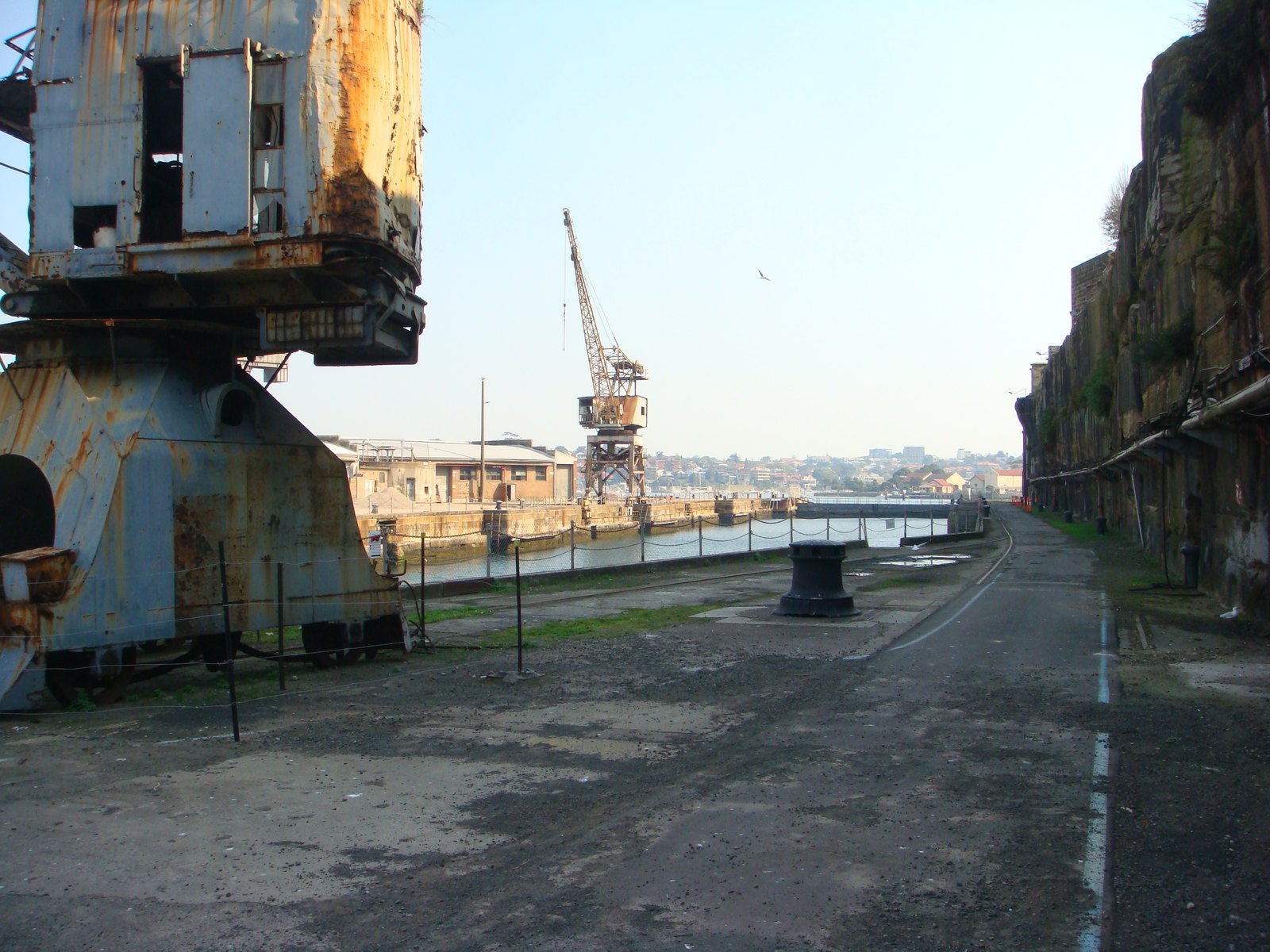
The rails in the selected photograph of Cockatoo Island curve beside a dock, with a large rusted crane on one side and a cut rock face on the other. Water, machinery and altered ground fit within a single view. Sydney Harbour’s industrial history is unusually easy to see here because the island itself became part of the workplace.
Known to Sydney’s First Nations peoples as Wareamah, the island later held a penal establishment and a dockyard. Today it is a public heritage destination reached by boat. The most useful visit connects the lower industrial areas with the upper island, while keeping those distinct histories visible.
Admission is only one part of the trip
The Harbour Trust’s visitor page, checked October 16, 2026, lists free island admission and visits seven days a week. Ferry travel, paid tours and accommodation are separate. The visitor center normally aims for 10 am–4 pm, but a detailed note says volunteer availability can affect opening.
Use a current Transport for NSW journey plan for the outward and return sailing. We have not verified a selected date’s timetable or fare. An island visit ends at a wharf, not at the edge of the last exhibit, so leave room to get back to the departure point.
The dock links two labor histories
The operator’s dockyard account explains that convicts built Fitzroy Dock, which received its first vessel in 1857. The island later expanded its shipbuilding and repair work, including naval activity. It identifies the docks, industrial precincts and surviving cranes as parts of that wider history.
A dock is a good place to begin because it is both a shape in the ground and a working arrangement. Its walls define the space occupied by a vessel; nearby equipment belongs to the tasks performed around it. You don’t have to know the identity of every crane to see that these elements operated together.
Keep the people in that relationship. A large structure is evidence of effort, but it does not describe the conditions under which that effort was required. Convict labor and later industrial employment are different systems, even when their work contributed to the same place.
Look closer at the curved rail
In the August 2009 reference, the rail follows the edge of the paved apron rather than heading straight across the image. A heavy crane occupies the left foreground; a second rises beyond the dock. The rock face creates another boundary on the right.
Follow those lines in sequence. The rail gives a direction, the dock gives a working space and the cut face shows that the available ground was changed. Together they make the view more informative than a portrait of rusted machinery alone.
The image does not identify a current permitted route. Barriers, conservation work and surfaces can change. Its documentary value is the dated relationship between the structures; it should not be used to clear a modern fence from a visitor’s plan.
The upper island has another scale
The convict-history account dates the penal establishment to 1839–1869 and describes surviving sandstone structures, including confinement cells and the guardhouse. The convict site is one component of the serial Australian Convict Sites World Heritage property.
These smaller spaces ask for a different kind of attention from the docks. Instead of starting with the size of a vessel or a workshop, read a doorway, a room division or an institutional boundary. Keep a particular building’s function attached to its label. The island’s later uses mean that a room can have more than one dated story.
Our recommendation is to compare one documented space of confinement with one dockyard structure. The comparison is not about which is more impressive. It reveals how different kinds of authority and work reshaped the same island.
Wareamah’s history did not begin with the prison
The Harbour Trust’s First Nations account connects Wareamah with the waterways and homelands of the Wallumedegal, Wangal, Cammeraygal and Gadigal peoples. It explains that later quarrying and industrial change obscured signs of earlier use. It also records First Nations participation in the workforce and experiences of incarceration.
The lack of an obvious early structure in a photograph is therefore not a reason to begin the story with colonial construction. Some histories remain visible as large buildings; others require records, cultural knowledge and interpretation. A heritage visit benefits from acknowledging that uneven visibility rather than mistaking it for an empty past.
Choose the route for your own needs
The accessibility page distinguishes the mostly accessible lower island from the upper level, reached by stairs or a steep slope. It also notes uneven surfaces and steps at some buildings. A wheelchair-accessible ferry does not make every historic building accessible.
The visitor page carries a Bolt Wharf conservation notice with an imprecise end point in 2026. Its presence is not proof that the area has reopened, so check current barriers and ranger advice rather than treating that year as a clearance date. Keep any confirmed tour or accommodation arrangement separate from a general walk.
Cockatoo Island makes industrial work tangible through large, connected things: dock, rail, crane and cut stone. Looking up toward the smaller buildings adds the people and institutions that a waterside photograph can leave outside its frame.
Follow the thread
At Constitution Hill, former prison spaces and a working court give another physical setting for examining changing institutions and power.
Hashima (Gunkanjima) shows another industrial island through a much narrower visitor route, with offshore views revealing buildings that a landing tour cannot enter.
The reference photograph