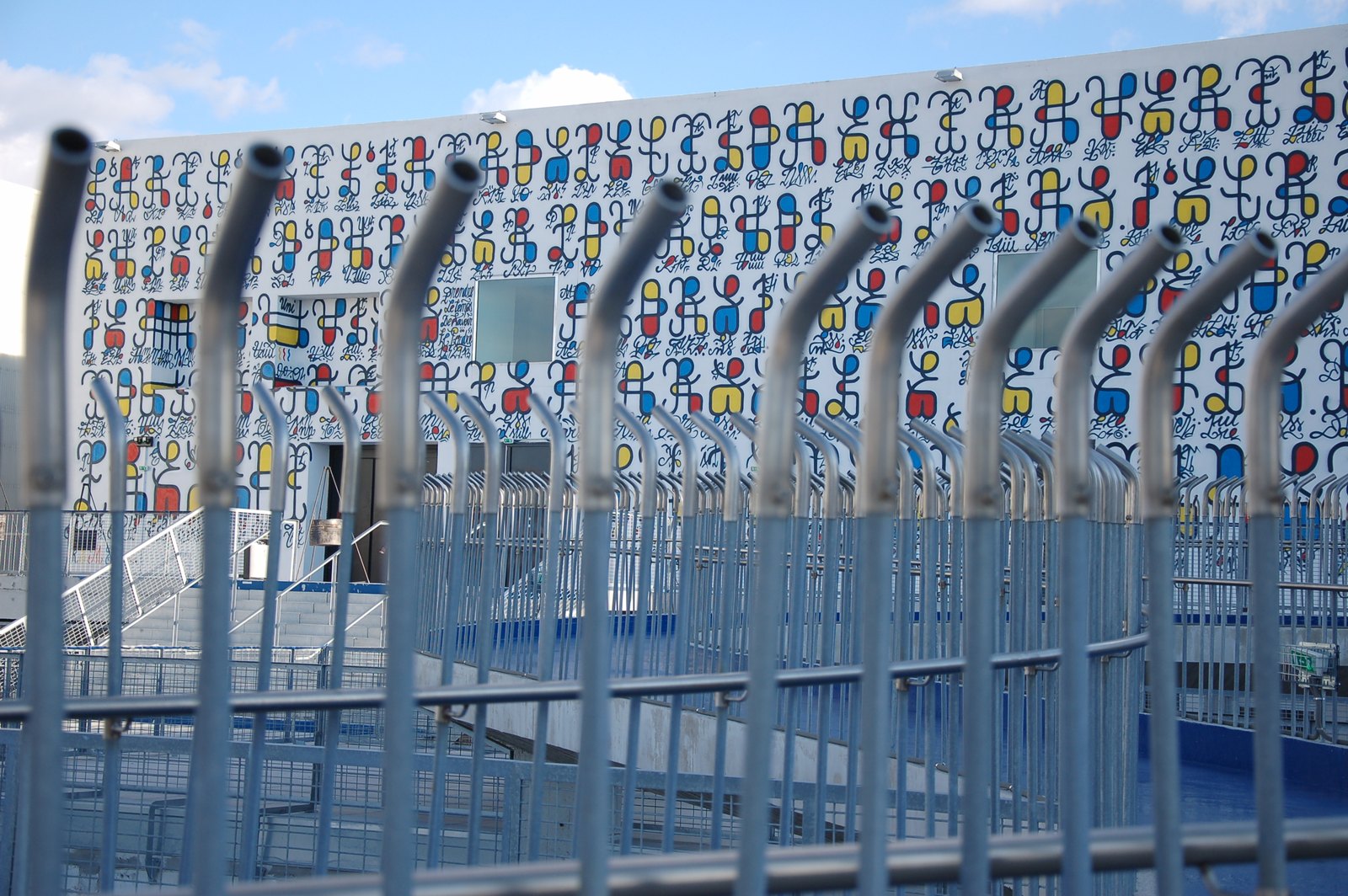
The former tobacco works in Marseille now contain courtyards, studios, exhibitions and a roof terrace. Finding the right entrance is part of understanding what survived.
La Friche la Belle de Mai is a piece of Marseille that learned to work at several speeds. People come for a show, artists work in studios, and public outdoor spaces allow visits with no exhibition as their destination. The former tobacco factory contains more than rooms with art hung in them.
It also belongs to a larger industrial story. The old manufacture was divided among different functions, including archives and media activity as well as the cultural project called La Friche. If you search only for the former tobacco factory, you can arrive at the wrong part of that history. Start with the cultural site's actual entrances.
Find La Friche, then choose the roof
The official access page identifies 41 rue Jobin, 13003 Marseille for pedestrians and ticketing. 12 rue François Simon is another entrance, serving pedestrians, deliveries and limited parking. The page lists the grounds as opening daily from 8 a.m.; indoor venues have separate schedules.
The self-guided walk is described as a free, roughly one-hour route, excluding exhibitions or food stops. It includes steps and stairs and specifically excludes the rooftop. The English page says roof access requires an exhibition ticket; event access can have its own terms.
No current rooftop opening calendar or price is promised here. If the roof is the reason for your journey, use the selected exhibition or event's terms before planning the rest of the visit. A free courtyard route doesn't imply an open roof.
A factory divided into pieces of city
The historical account traces the tobacco manufacture's move to Belle de Mai in 1868 and its growth beside the railway. After closure, the wider complex was divided into three poles: heritage institutions, media industries and the developing cultural project.
That division explains why architectural continuity doesn't guarantee the same visitor destination. Adjacent buildings can share an industrial past while belonging to different present-day institutions. The Jobin entrance gives a more useful starting point for La Friche than a generic pin for the old manufacture.
The name also belongs to the surrounding Belle de Mai neighborhood. La Friche's public spaces and programs form a relationship with that neighborhood; they aren't an isolated cultural campus set outside the city. A playground or shared garden can matter to that relationship as much as a major exhibition.
Reuse happened in stages
The English project history dates the cultural occupation to 1992. Later construction introduced or adapted performance rooms, studios and public facilities. Major work associated with Marseille's 2013 European Capital of Culture year expanded circulation and exhibition space and made the roof accessible.
There was no single finished conversion after which the place stopped changing. The practical result is a site with different levels, building ages and kinds of access. Some areas feel like streets between destinations; others are rooms entered for a particular program. The industrial framework holds those differences together.
The historical photograph selected for this article shows curved metal railings in front of a patterned wall. It's a detail of the cultural site's visual and physical layers, rather than a wide view over Marseille. Its 2014 date also matters: wall art and circulation arrangements can change.
A walk with a red thread
The operator's self-guided route follows a red path through the site, connecting courtyards, stairs and cultural workspaces. For a first visit, picking up its map at reception is more helpful than trying to turn the whole former factory into an improvised shortcut.
The path offers a way to see how ordinary movement has become part of the conversion. Outdoor rooms, stairs and passages link activities that don't need to share an audience. You can read the arrangement while respecting the difference between a public passage and someone's working space.
The neighborhood isn't scenery
La Friche's program includes spaces used for making as well as presenting work. That ongoing production helps explain the scale of the place: a cultural center needs more than a box office and a sequence of display rooms. It needs somewhere for rehearsals, preparation and the less visible labor behind an event.
The tobacco works once separated its industrial activity from the surrounding streets. The cultural project has opened selected spaces back toward the neighborhood while retaining places with a more specific purpose. On a visit, that change is easiest to notice between the headline attractions, in the courtyards and routes people use simply to get somewhere.
Follow the thread
Tabakalera gives another tobacco factory a cultural role while retaining the building's industrial name and the history of its women workers.
At Matadero Madrid, separate pavilions and outdoor streets likewise make a cultural complex that cannot be understood through one venue or ticket.
Sources and reporting
Researched October 16, 2026, from the linked sources. This is desk reporting; no firsthand visit is claimed.
The reference photograph