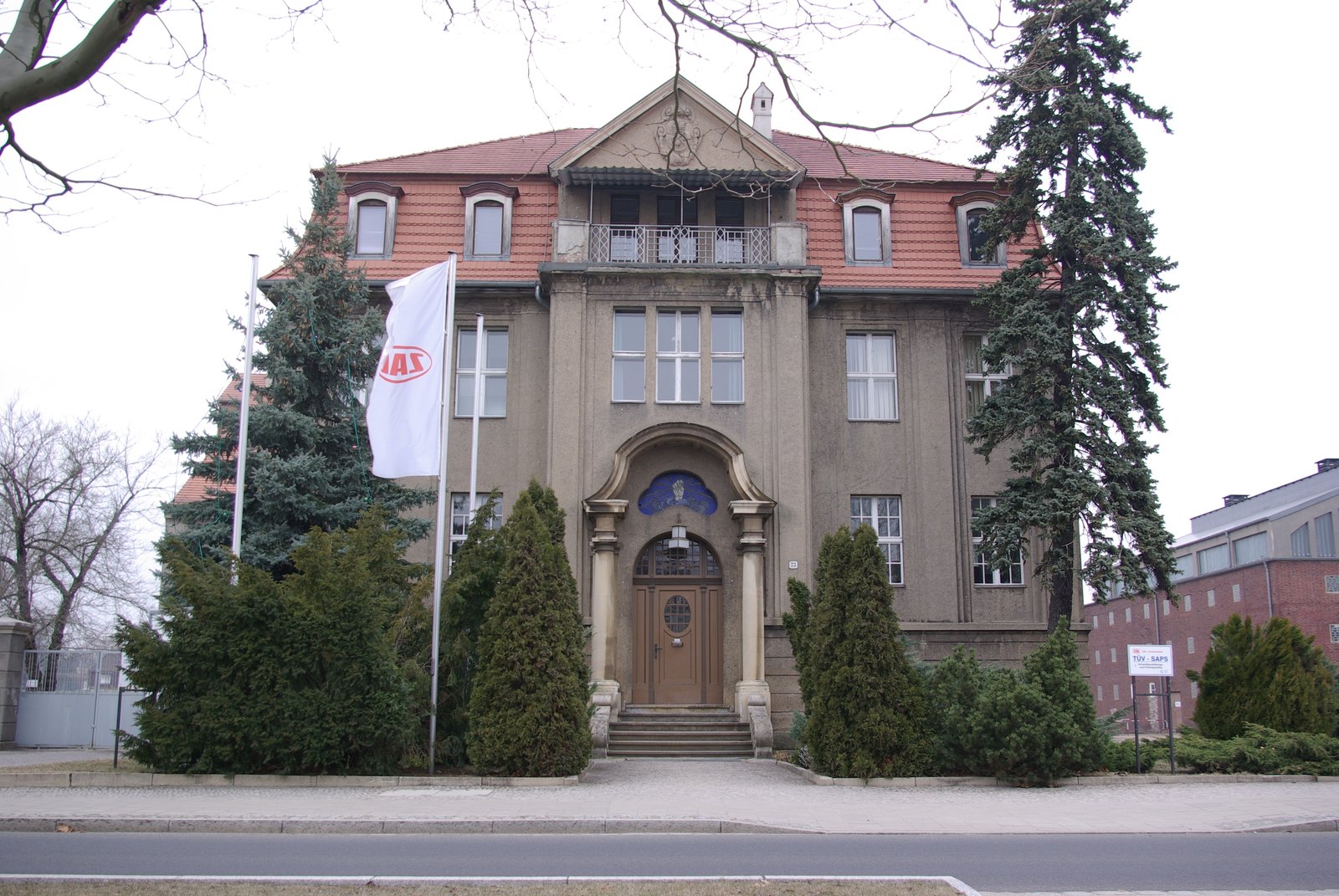
A former coal plant in Luckenwalde links its exhibitions to electricity production. The old industrial equipment has acquired a new job.
An old conveyor can become a museum object. At E-WERK Luckenwalde, the project account gives it another role: carrying wood chips toward a system that produces heat and electricity. The detail makes this former coal power station south of Berlin different from a factory that simply lends its rooms to art.
The building is a contemporary art center and a power-producing project. Energy helps run the institution, and energy sales contribute to its cultural program. You can understand the idea without treating a visit as a behind-the-scenes inspection of an operating plant. Access to exhibitions and access to machinery are separate questions.
Plan the visit around the program
The visitor information, checked October 16, 2026, gives the address as Rudolf-Breitscheid-Straße 73, 14943 Luckenwalde. During exhibition periods, it lists Saturday and Sunday, noon–6 p.m. Outside those periods, opening is tied to events or appointments.
That conditional opening matters more than a generic weekend itinerary. Choose an exhibition or advertised event before arranging the journey. The operator also says the site accepts cash payments only. No standard admission price or available tour slot is established here.
The historic building is not step-free. The institution asks visitors with specific access needs to contact it at least two weeks ahead.
Follow the fuel, on paper first
In its New European Bauhaus application, E-WERK describes reusing a conveyor from the original 1913 station to move locally sourced waste wood chips. Wood-gas production and solar generation form part of the new system. This is the project's own account of its process, rather than an independent measurement of its environmental performance.
The compelling detail is the continuity of a job: material still needs to be moved. The fuel and generating equipment have changed, while some of the older infrastructure contributes to the new operation. Reuse here means finding work for something already built, in addition to retaining its appearance.
A conveyor's survival alone wouldn't prove that story. Its function needs an explanation from the people operating it. The application supplies that explanation, including the contribution of former workers' knowledge to understanding the old infrastructure. Whether a particular tour reaches the conveyor remains a question for that tour's description.
An electricity bill connected to an exhibition
Kunststrom's own account explains the model behind the name, which roughly means art electricity. The project works with Bürgerwerke to distribute power, and directs income from energy sales toward production and the art program. Its cultural ambition therefore has a practical connection to generation and distribution.
An exhibition in a reused power station can make electricity visible as a historical subject. E-WERK also makes it part of an institutional budget. That doesn't mean an artwork can be reduced to its power consumption, or that the business model explains every curatorial choice. It means the building's infrastructure participates in what allows the program to exist.
For a visitor, that creates two possible lines of interest. You might choose a show for its artist or theme, then learn how the place supports it. Or you might come because the energy model interests you, using an advertised tour to explore the relationship between old and new equipment.
What the building's second life leaves unresolved
The operator says artist Pablo Wendel acquired the former plant in 2017. Reanimating an industrial building involves more than putting an exhibition in an empty hall: working areas, visitor circulation, studios and technical equipment each impose different needs.
Avoid reading the project's environmental language as a guarantee that every component is impact-free. The useful, evidenced story is narrower: a former coal plant has been adapted to produce energy through a different system, and that production is connected to contemporary cultural work. No independent carbon audit was reviewed for this article.
If the conveyor is included in your chosen visit, ask how the material reaches it and where it goes next. That small sequence connects the historic building to its present operation. The power station's second life becomes clearest at the point where an old piece of infrastructure is asked to work again.
Follow the thread
Battersea Power Station follows another power station into a new economy, with turbine footprints remaining after the generating machinery has gone.
At Centrale Montemartini, engines become museum objects beside ancient sculpture, giving preserved machinery a different relationship with art.
Sources and reporting
Researched October 16, 2026, from the linked sources. This is desk reporting; no firsthand visit is claimed.
The reference photograph