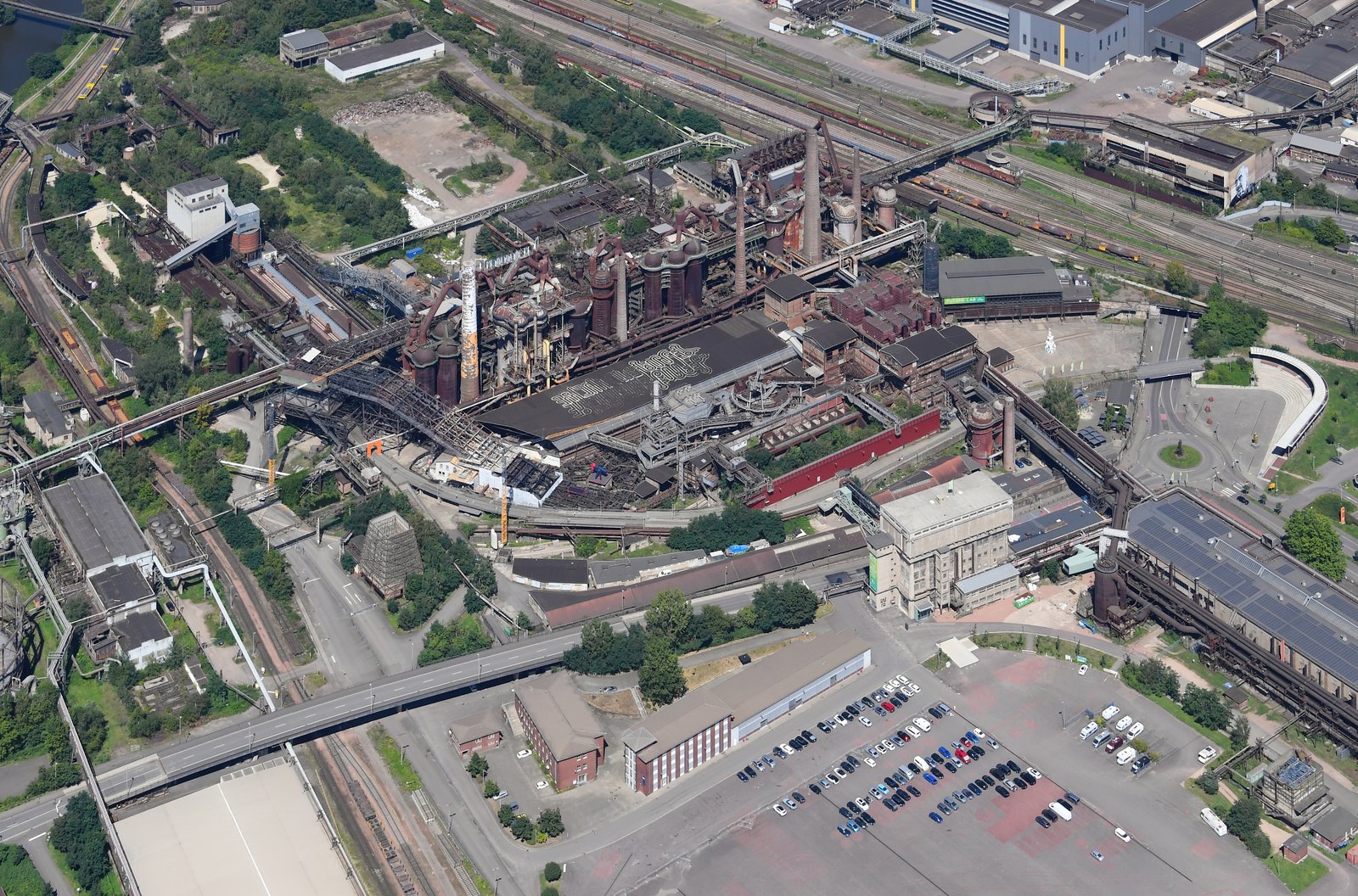
At Völklingen, the furnaces, pipes and high walkways survive as a connected industrial landscape. Understanding the sequence is more rewarding than collecting rust-colored views.
Völklinger Hütte can look like a city made entirely of machinery. Pipes cross above roofs; tall vessels crowd together; stairs and platforms thread through the structure. The former ironworks in Germany's Saarland is preserved closely enough for visitors to encounter a system, rather than a few isolated machines arranged in a museum.
UNESCO's inscription recognizes the significance of that survival. The site entered the World Heritage List in 1994. Its value lies in the relationships between the parts: the equipment for producing iron remains understandable as a complex industrial process.
Follow a process through the structures
The ironworks is often described loosely as an old steel mill. The more useful starting point is ironmaking: raw materials, furnaces, air supply and the movement of material between them. The operator's guide to places and work sites gives names to structures that otherwise blur into a thicket of metal.
Start in the Burden Shed: rail wagons delivered ore, which was sorted into silos. Its surviving rail track makes that arrival legible. Next, follow the inclined lift and charging platform. A monorail supplied all six furnaces with raw materials; coke came up another inclined lift. At the platform, ore, sinter, coke and other ingredients entered the furnace hoppers. Below, molten pig iron was tapped into torpedo cars for transport to the steelworks.
That is a production sequence, rather than a prescribed visitor itinerary. The silos, elevated track, charging level and tapping area each belong to a different stage. Their connections make the mass of machinery easier to read.
The aerial reference photograph taken in August 2024 makes those relationships especially clear. Rail lines, long roofs and the concentrated furnace group establish a hierarchy. From the ground, the visitor route unfolds that compressed plan into successive spaces. The two views complement each other without being interchangeable.
Work belongs in the account
The site chronology traces the works through industrial expansion, closure and preservation. Reading that history alongside the machinery gives the site a timescale. The preserved structures were not all conceived at once; they accumulated as production changed.
Industrial heritage also needs the history of the people who operated it. Völklingen's forced-labor interpretation addresses coercion under National Socialism. This is part of the works' history, not an unrelated subject attached to a scenic ruin.
Leave room for this interpretation during the visit. It changes how familiar industrial words—labor, output, efficiency—are understood. The surviving equipment can demonstrate engineering skill while also recording a workplace shaped by unequal power and, during the Nazi period, persecution and forced labor.
An inhabited cultural site
The former works now hosts exhibitions and cultural programming. That adds another reason to visit, but a temporary exhibition should not be mistaken for a permanent feature of every route. Check the current program separately if a particular artist or show is central to the trip.
The heritage complex remains the larger setting. Art appears within a landscape whose proportions were established for production. Large rooms, hard surfaces and long sightlines do not behave like a neutral gallery. Part of the experience is seeing how contemporary work responds to a structure with a very specific past.
Plan around the route you can use
The official visitor page listed standard admission at €17 when checked on October 16, 2026. Published seasonal hours were daily 10 a.m.–7 p.m. from April 1 through November 1 and 10 a.m.–6 p.m. from November 2 through March 31. The furnace group and Paradise area close half an hour earlier. December 24, 25 and 31 are closed.
Most areas are reached by ramps or lifts, according to the operator, but the 45-meter viewing platform is an explicit exception. Ask the visitor service about the route that meets your needs. A site's overall accessibility description does not guarantee access to its highest viewpoint.
The entrance is associated with the water-tower building at Rathausstraße 75–79 in Völklingen. Wear suitable shoes for the outdoor industrial route, use the designated paths and collect a helmet where required. Public and private tours have their own times and charges; confirm the language before booking.
Völklingen rewards a visit that keeps returning to the same question: what connected this structure to the next one? The answer turns an impressive accumulation of metal into a readable place of work.
Follow the thread
Gasometer Oberhausen follows the storage side of an industrial energy network, preserving the huge container that balanced gas supply and demand.
At F60 Visitor Mine, the path of material explains a vast steel machine designed to move the earth above a coal seam.
Sources and reporting
Researched October 16, 2026, from the linked sources. This is desk reporting; no firsthand visit is claimed.
- UNESCO Völklingen Ironworks
- Places and work sites
- Burden Shed
- Blast furnaces, lift and charging platform
- Site chronology
- Forced labor at the works
- Official visit information
The reference photograph