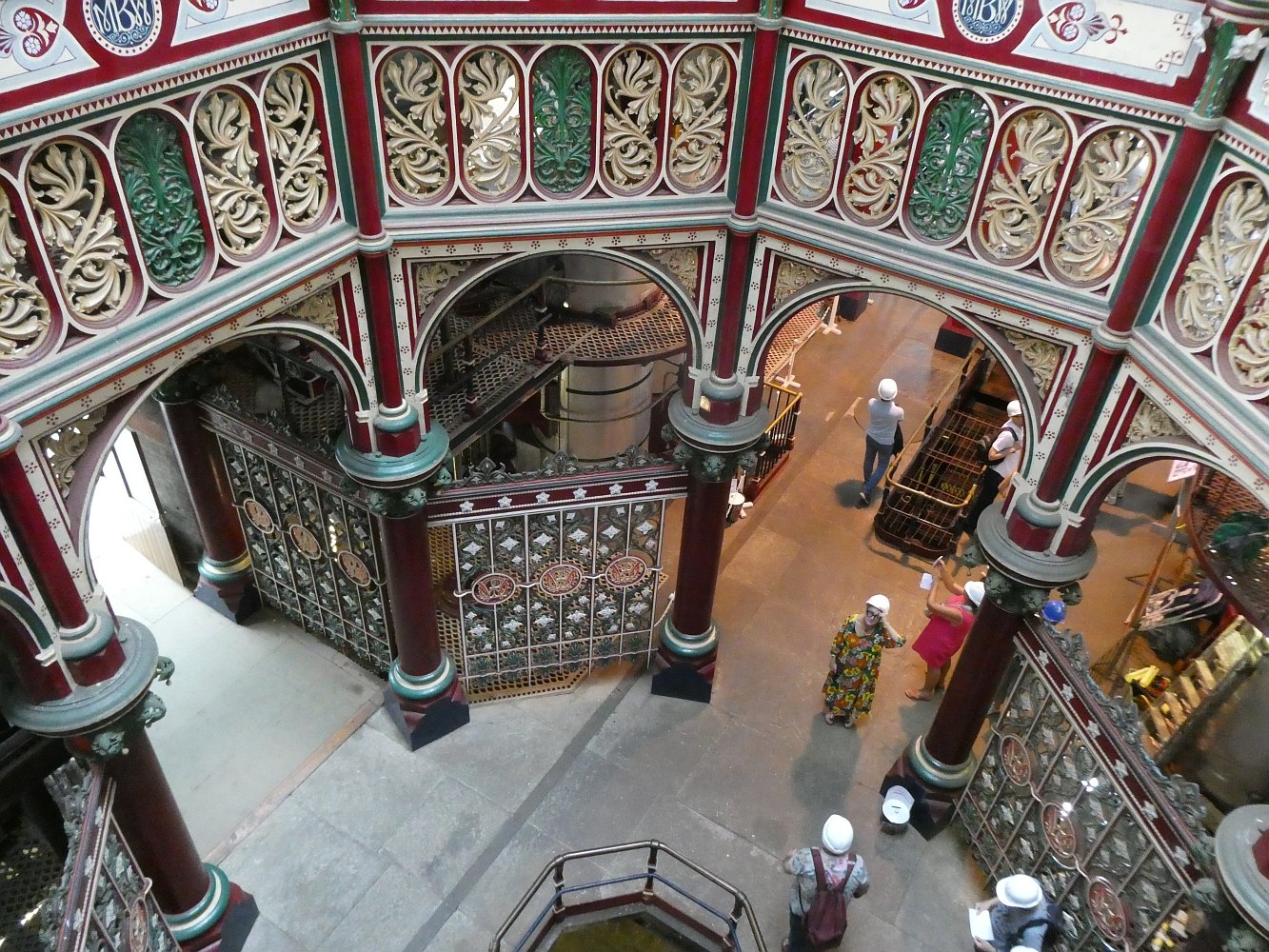
A sewage pumping station is an unlikely place to go looking for ornamental ironwork. Crossness, in southeast London, puts the two together: decorated cast iron surrounds the great beam engines built for the city's sewer system. The room's beauty makes the machinery worth a longer look, and the machinery explains why the room exists. Crossness overview, Historic England.
You can visit, but only on selected dates. Your first decision is whether to see an engine scheduled to run under steam or join a guided visit focused on the site's story. That choice also affects the journey from the nearest station.
Visit at a glance
| Plan this | What to know |
|---|---|
| Location | The Old Works, Bazalgette Way, London SE2 9AQ |
| Nearest station | Abbey Wood, served by the Elizabeth line and National Rail services |
| Opening pattern | Selected dates; choose a specific event before traveling |
| Main choice | Steaming Day or Guided Tour |
| Walking approach | The operator estimates 40–45 minutes from Abbey Wood |
| Arrival destination | The visitor car park and pedestrian entrance on Bazalgette Way |
Use the official visit calendar and arrival instructions together. A railway ticket to Abbey Wood does not complete the journey to the museum.
Choose the day before choosing the train
On a Steaming Day, Prince Consort is scheduled to operate under steam and visitors can explore the Beam Engine House with volunteers available. A Guided Tour is a smaller booked visit with explanation, a film and a model demonstration; the engine does not steam on those tour days. The operator recommends advance booking. Visit types.
| If your priority is… | Start with… | Confirm before booking |
|---|---|---|
| Seeing machinery move | Steaming Day | Engine plans and event times |
| Understanding the engineering | Guided Tour | Tour duration and meeting instructions |
| A dedicated photography session | Photography Visit | Equipment, access and session conditions |
The table is a way to narrow the choice, not a claim that one experience is better. A still engine can be easier to study while someone explains it. Movement gives you another kind of understanding: you can watch parts working together rather than mentally assembling them from separate views.
As checked on October 16, 2026, the standard adult price listed for Steaming Days, Guided Tours and most special events is £20.37; the page also lists a £22.50 option with a Gift Aid donation. Special events can have their own prices. Check the selected event before paying. Tickets and prices.
Getting from Abbey Wood to Crossness
The free vintage shuttle runs on Steaming Days and most special events, not on Guided Tour days. The operator identifies Bus Stop C beside Abbey Wood station's main concourse as the pickup point and links to event bus times. For visits without a shuttle, use the published walking route or arrange a taxi to the visitor car park. Crossness advises against choosing a local bus simply because its stop looks nearby: the final pedestrian access may be unclear. Getting here.
The practical lesson is to plan both ends of the visit at once. Check the last return shuttle, or settle on a walking or taxi plan, before entering the engine house. Allow the final approach its own time in your schedule. A short ride on a city map and a usable route through an industrial area are different things.
Drivers should follow the visitor-car-park directions; the Thames Path gate isn't an alternative entrance for every booking.
Look at decoration and machinery separately
Crossness calls its central decorated space the Octagon. Its official overview identifies colored columns, cast iron and the beam engines as the main features of the interior. Inside Crossness.
Try making two passes with your eyes. First, follow the repeated ornament: the borders, openings and changes of color that organize a surface. Then follow the engine's major moving parts. Looking at both at once can make the room feel complicated; separating them briefly makes it easier to see how much attention went into both structure and presentation.
There is a particularly apt detail in the decoration. The National Lottery Heritage Fund's account of the restoration describes ironwork inspired by fruits with laxative associations. It's a small connection between the ornament and the building's job, rather than decoration chosen entirely at random. Restoration account.
A good question for a volunteer is which details are original and which were restored. That brings the present-day work into the conversation. The same Heritage Fund account records the museum's reopening after restoration in 2016 and the role of volunteers in rescuing the site. The maintained interior you visit is the result of work as well as survival.
Why London needed it
Crossness belonged to Joseph Bazalgette's scheme for London's sewers. Historic England describes a city whose sanitation system could no longer cope, with repeated disease outbreaks and the heavily polluted Thames forcing action. The station opened on April 4, 1865, with four beam engines. Historic England's historical account.
The opening was treated as a public achievement. Crossness's account, drawing on contemporary newspapers, records the Prince of Wales starting the engine named Albert Edward, followed by a banquet. That detail is a useful correction to the idea that the building's function was something to hide. Its inauguration was an occasion for ceremony. The 1865 opening.
Remember that distinction when you look at the room. Today, the contrast between sewage and elaborate decoration may seem surprising. The opening ceremony suggests another way to read it: essential urban infrastructure was important enough to display with pride. You can appreciate the ironwork without losing sight of the public-health problem behind it.
Access and a comfortable visit
Crossness says most of the site can be visited without steps, but the upper level of the Beam Engine House requires stairs. Outdoor routes include gravel and uneven surfaces. The vintage buses are not designed for modern step-free access; wheelchairs and strollers need to be folded. Discuss your route and parking needs when booking if those limitations affect you. Accessibility information.
The RANG railway was still marked out of service on October 16, 2026. Don't depend on it for arrival.
Crossness is most rewarding when you allow the engineering and decoration equal attention. The next time you see a city celebrating a new piece of infrastructure, you may find yourself thinking of an engine house, a royal opening, and some unusually appropriate fruit.
Visitor information checked October 16, 2026. Event availability and shuttle departures must be checked for the selected date.
The reference photograph